Decision support tools for improved health outcomes.
We build decision support that helps healthcare providers find what’s likely wrong, see why, and take the right next step. Built with clinicians, research and data from East Africa, so it fits the patients in front of you.
Why: Chest indrawing (danger sign); Cough, Fast breathing
Illustrative probabilities from a scripted example. Not the Elsa model, and not medical advice.
Working with government & partners





Most health decisions are made far from a specialist, a lab or a second opinion.
In community clinics, drug shops and rural facilities, one provider often sees dozens of patients a day with little diagnostic equipment. The few minutes they spend with each patient shape everything that happens next.
Elsa brings specialist-level decision support into that moment, so the right patients are treated, referred or followed up, and fewer go home with the wrong medicine.
From symptoms to next step, always showing why.
You capture symptoms, history, vitals and local context in English or Kiswahili, guided by the questions that matter for this patient.
Elsa combines expert knowledge with local disease patterns to rank the likely causes, and shows you which findings drove each one.
Clear guidance on triage, referral, treatment and follow-up, while you stay in charge of the decision.
Capture what the provider sees
You capture symptoms, history, vitals and local context in English or Kiswahili, guided by the questions that matter for this patient.
Rank the likely conditions
Elsa combines expert knowledge with local disease patterns to rank the likely causes, and shows you which findings drove each one.
Guide the next step
Clear guidance on triage, referral, treatment and follow-up, while you stay in charge of the decision.
Elsa’s health intelligence, for four kinds of decisions.
Disease identification
Uses a patient’s history and how they present today to find the most likely causes of illness.
Triage
Sorts patients by urgency, so the sickest are seen first and everyone gets care at the right level.
Adherence prediction
Flags patients likely to miss their HIV treatment, so clinicians can step in before they’re lost to follow-up.
Outbreak insight
Tracks how common diseases are over time, sharpening diagnosis and giving an early signal of outbreaks.
A safety net for clinicians, not a black box.
Elsa stays in the background until it can help: a missed danger sign, a likely alternative, a safer next step. The provider always makes the call.
How we keep Elsa safe →Explainable
Every suggestion shows the findings behind it, so providers quickly understand why, and know when to disagree.
Context-specific
Built with expert knowledge, research and data from East Africa, so models reflect the patients providers actually see.
English & Kiswahili
Available in both English and Kiswahili, to support providers across every level of care.
Open by default
Open source and open algorithms, reviewed by a community of clinicians, researchers and engineers.
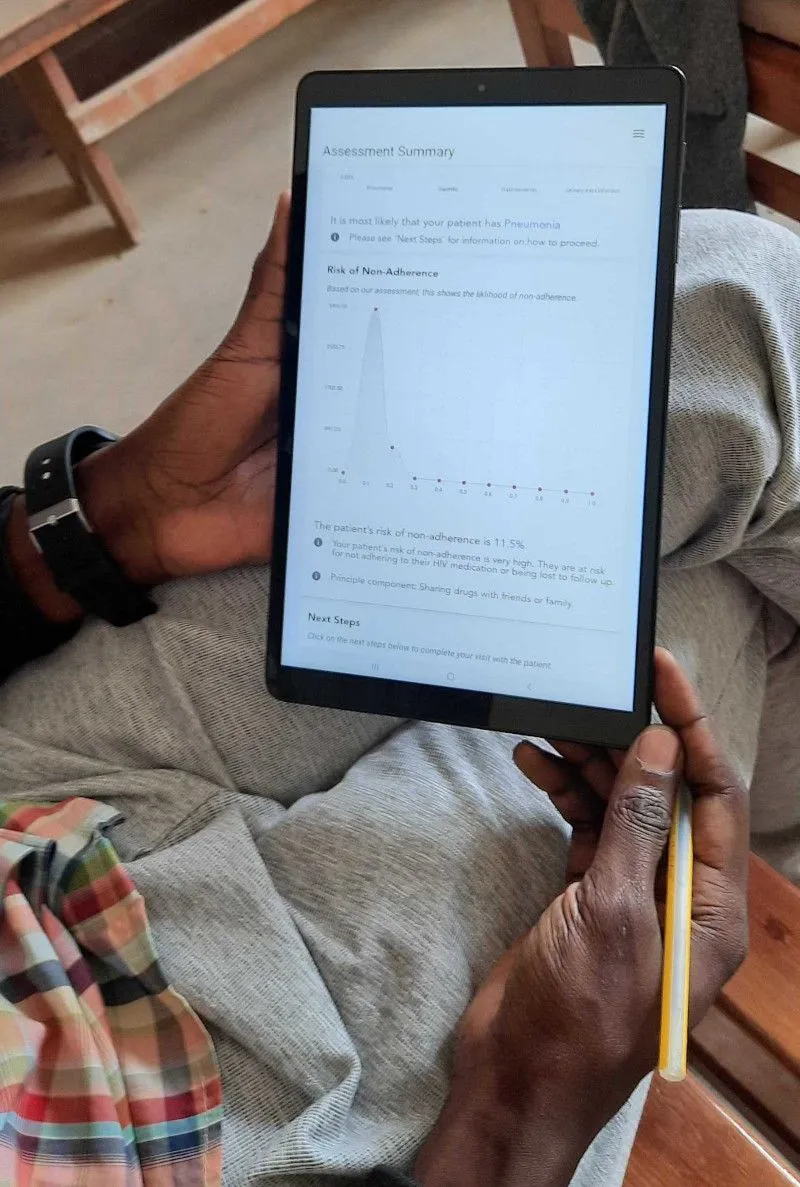
“It offers more than just tracking my patients. It helps me assess my patients’ symptoms and recommends a treatment plan.”
Use Elsa directly, or build it into what you already run.
Hospitals, clinics, labs & pharmacies
Decision support at the point of care, so your team can focus on what matters most: your patients.
Learn more →For digital healthApps & telehealth services
Integrate Elsa’s clinical insights into your product and raise the quality of every consult, with support from our team.
Learn more →For health programsGovernments & impact partners
Level up your program’s impact with specialist-level support, even in the most remote facilities.
Learn more →